Periphery Robotics develops autonomous robotics systems and non-destructive countermeasures. No explosives. No collateral damage.
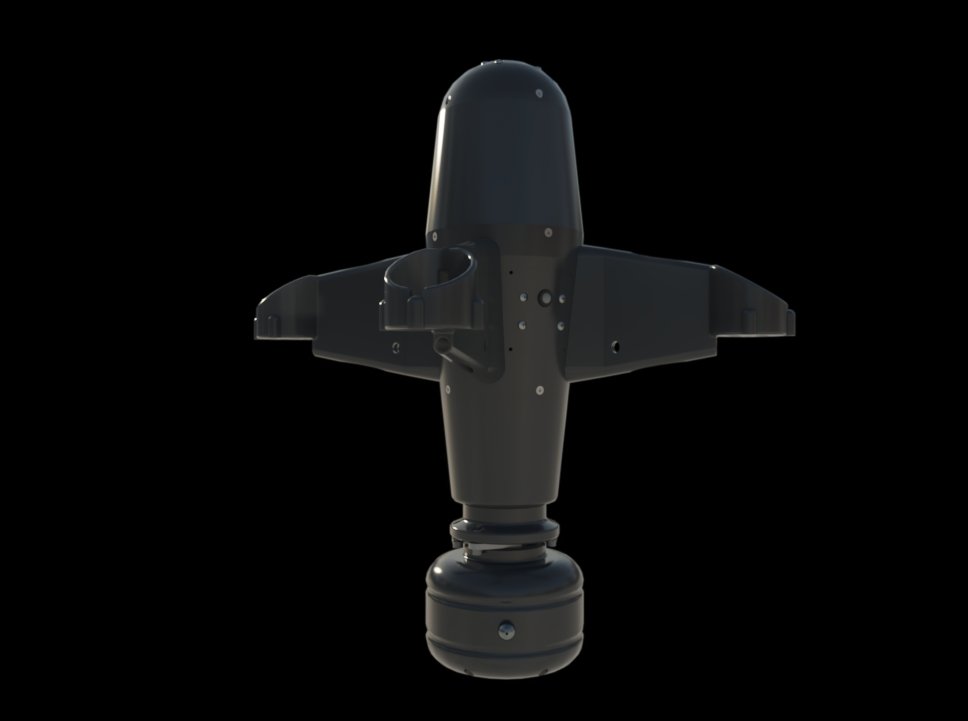
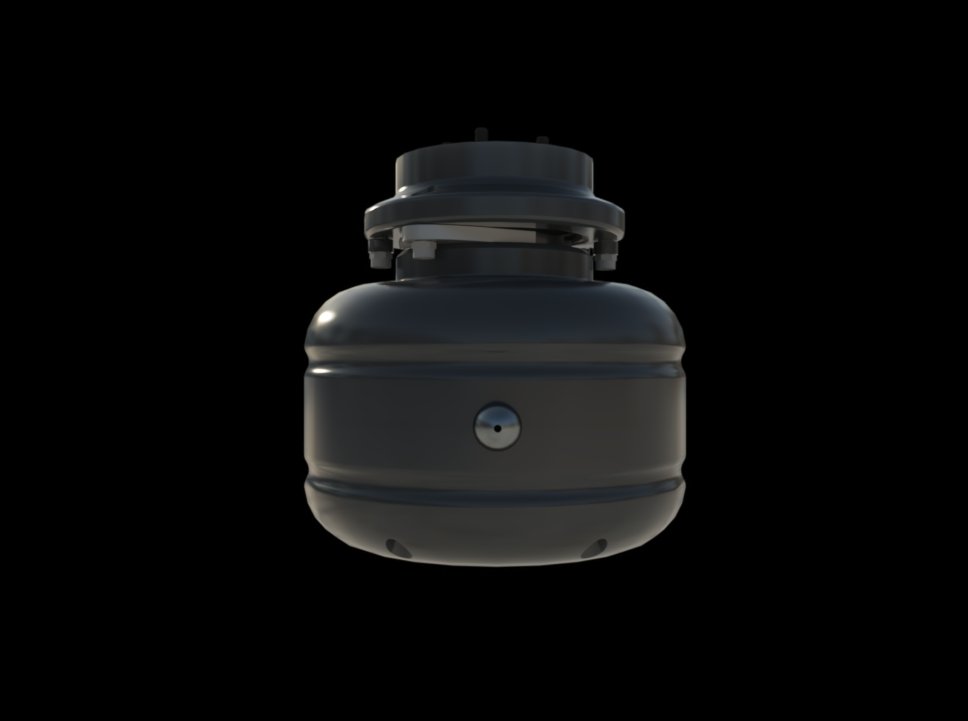
The ORBNET is a compact, lightweight centrifugal feed entanglement payload designed to physically disable the mobility systems of autonomous robotic platforms on contact — without explosives or collateral damage.
At rest the device is fully inert — mechanically locked by spring-tensioned latches until sufficient rotational speed is achieved. Once spinning, a two-stage threshold mechanism deploys weighted filament lines that wrap around and jam rotor blades, joints, and drive systems.
The battlefield has changed. Autonomous robotic systems — drones, bipedal humanoids, quadrupedal platforms — are proliferating faster than countermeasures can adapt.
Existing solutions are kinetic or electronic: missiles, jammers, directed energy. They destroy the target, create debris, cost a fortune per engagement, and fail entirely against fully autonomous platforms that don't rely on external signals.
The exchange ratio is broken. An adversary fields dozens of commercial drones for the cost of a single interceptor round. Defenders need a better answer.
Kinetic interceptors cost orders of magnitude more than the threats they defeat.
Destroying a drone creates a debris field. Unusable in urban or personnel-dense environments.
Jamming fails against pre-programmed autonomous platforms with no active comms link.
Destruction eliminates operator data, payload info, and manufacturing origin — all recoverable from an intact platform.
All operational logic is implemented entirely through calibrated mechanical and magnetic physical relationships. No sensors. No software. No failure modes from electronic interference. Rotational speed is the sole input — all functional outputs are deterministic physical consequences.
Spring-tensioned centrifugal latches hold the internal spool locked to the canister. Ball magnets retain filament ends at the feed ports. The device cannot deploy in any orientation without rotational input — no arming circuit required.
As rotational speed increases, centrifugal force acts on the latch levers, pulling them radially outward against spring tension. At the first calibrated threshold, the latches disengage from the spool teeth — decoupling the spool from the canister and permitting independent rotation governed by wave washer friction.
As speed continues to rise, centrifugal force on the ball magnets at the feed ports exceeds the ring magnet retention force. Weighted filament ends release outward, forming a controlled, expanding field of rotating filament lines extending from the canister.
Rotating weighted filament contacts and wraps around rotor blades, joints, legs, or drive systems of the target platform. The entanglement generates sufficient mechanical resistance to stall, jam, or physically sever mobility components — rendering the platform immobile and recoverable.
Physically disables without destroying. Target platforms remain structurally intact — preserving operator data, payload configuration, communication hardware, and manufacturing origin for exploitation.
Purely mechanical operation. Immune to jamming, cyber attack, and GPS denial. Equally effective against remotely operated, semi-autonomous, and fully autonomous platforms.
No requirement on the delivery mechanism. Motor driven, vehicle mounted, fixed emplaced, or jettisoned while spinning onto a target from above — a single system for every deployment scenario.
One system. Three threat classes. Rotary UAVs, bipedal humanoid robots, and quadrupedal platforms are all defeated by the same core entanglement mechanism — scaled to the mission.
Mechanically inert at rest — locked by default until rotational speed threshold is reached. No electronic safety circuit, arming mechanism, or operator intervention required to make the device safe.
Constructed from commercially available mechanical components — no explosive charges, guidance systems, or precision electronics. Dramatically lower cost per engagement restores a sustainable exchange ratio against low-cost drone threats.
Counter-drone and counter-robotics operations in contested environments. Effective against fully autonomous platforms immune to electronic warfare. Jettison deployment enables drone-on-drone engagement without operator proximity.
Fixed or mobile emplacement protecting power plants, government facilities, and strategic assets from rogue autonomous systems. Non-destructive neutralization eliminates falling debris risk over protected areas.
Disabling unauthorized UAVs near prisons, airports, stadiums, and public events without destructive means. Platform intact for evidence recovery and operator identification.
Neutralizing smuggling drones and autonomous ground platforms at border crossings. Cost-effective deployment against high-volume low-cost threats where kinetic engagement is economically unsustainable.
We work with defense programs, government agencies, and law enforcement organizations. Contact us to request a technical brief or discuss integration requirements.